
A cozy home after loneliness does not appear through decoration alone. It grows through small signals of care. An empty room can feel louder when life changes, routines shift, or connection feels distant. The home needs warmth that meets you gently. Start with what your senses notice first. Add light where the room feels flat. Bring softness where it feels cold. Create small rituals that welcome you back. These changes do not erase emotion. They give it somewhere softer to land.
The entry matters because it sets the emotional tone. Place something warm near the door. Use a lamp instead of harsh overhead light. Keep shoes and bags from spreading chaos. Add a small bowl for keys. Hang one piece that feels personal. Let the first view feel settled. A welcoming home does not need perfection. It needs evidence of care. A cozy living reset starts with that first emotional greeting.
Lighting can make an empty room feel less sharp. Use lamps at different heights. Choose warmer bulbs. Light corners that feel forgotten. Avoid relying only on ceiling fixtures. Turn on one lamp before sunset. This small habit prevents the room from feeling abandoned. Add candlelight if it feels safe. Let evening arrive gradually. For a related emotional shift, see ways to reinterpret quiet space with intention.
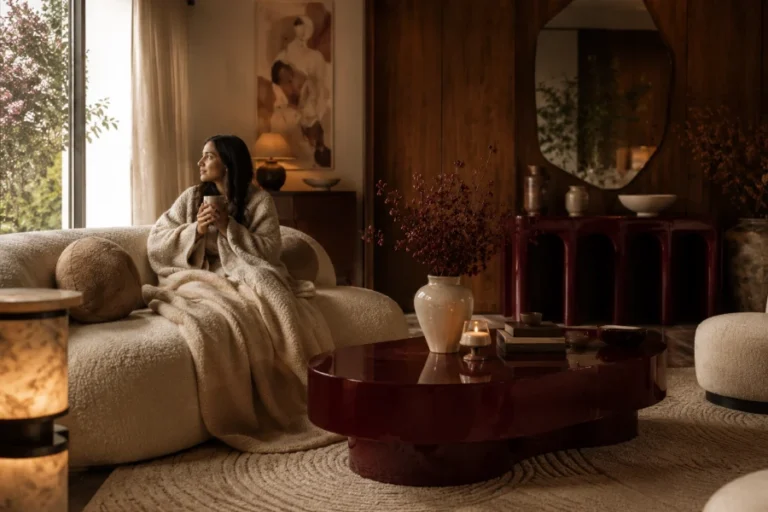
Texture helps the body feel supported. Place a throw where you actually sit. Choose pillows that invite use, not just display. Add a rug if the floor feels cold. Keep a robe or cardigan nearby. Use bedding that feels generous. Let comfort remain visible. Do not save softness for guests. Your daily experience deserves it first. A warm home atmosphere begins when the body relaxes.
Silence can feel peaceful or lonely depending on context. Gentle sound can change that balance. Play soft music while cooking. Keep a familiar playlist for evenings. Use a small fountain if water sounds soothe you. Open a window when neighborhood life feels comforting. Avoid using noise only to escape feeling. Let sound support presence instead. The goal is companionship from the environment. A home can feel alive without becoming overstimulating.
A meaningful corner gives the room emotional direction. It could hold a chair, lamp, journal, or plant. Keep it simple. Make it usable. Place it where natural light arrives. Add one object connected to memory. Avoid turning it into storage. Visit it daily, even briefly. Let the corner become a ritual. A comforting home routine makes belonging repeatable.
Warmth should develop at a human pace. Do not pressure the home to feel finished immediately. Add one comforting layer each week. Notice what helps. Remove what feels performative. Invite small signs of life into the room. Fresh fruit, folded blankets, and open curtains all matter. Keep caring for the space even when mood fluctuates. Over time, the room becomes proof that you are staying connected to yourself.



Leave a comment