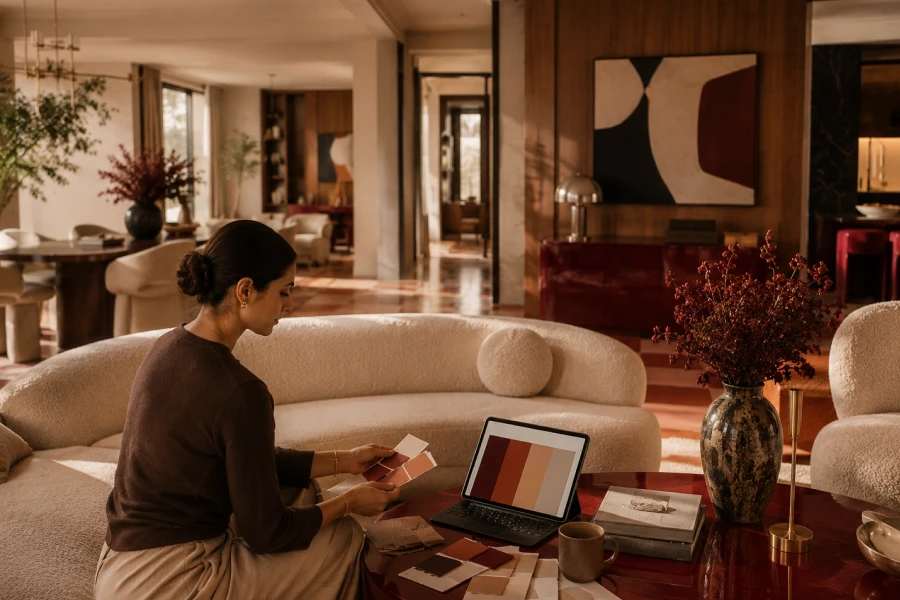
A home color palette with ai helps connect rooms without making the entire house look identical. That balance matters. Homes feel better when each space has its own mood and still belongs to the whole. Many people choose colors room by room. The result can feel random once doors stay open. AI can compare sightlines, undertones, and lifestyle needs across multiple areas. It can suggest a flexible system. You keep the emotion. The tool helps build the flow.
Cohesion comes from repetition with variation. Repeat undertones, not necessarily exact colors. Carry one neutral through connected areas. Use accent shades in different strengths. Let private rooms feel more expressive. Keep hallways calm when they connect several spaces. AI can show how colors relate across the home. It can create families instead of isolated choices. A whole home color strategy makes every room feel considered.
Sightlines reveal where color conversations happen. Stand at the entry. Look toward the living room. Check what you see from the kitchen. Notice bedroom doors, trim, and hallway turns. Colors that never touch can still appear together visually. Photograph these views before planning. Share them with AI if possible. Ask which transitions need softness. For more mood-based planning, read personal palette choices that begin with lifestyle.
Furniture should guide the palette, not fight it. A sofa, rug, dining table, or cabinet finish may already lead the room. Upload or describe those items carefully. Include wood tone, fabric color, and metal finishes. Ask AI for colors that support them. Request options that make older pieces feel intentional. Avoid palettes that require replacing everything. A personalized color palette should respect the home you already have.
Each room can have a different role. Bedrooms may need calm. Kitchens may need freshness. Living rooms may need warmth. Workspaces may need focus. The palette should support those functions. Keep the undertone family consistent. Change depth, texture, or accent placement instead. Use bolder color in smaller doses. This approach gives personality without chaos. The house feels layered, not mismatched.
Seasonal light can change the story. Winter rooms may look cooler. Summer rooms may look brighter. North-facing spaces can feel gray. South-facing spaces can intensify warmth. Ask AI to account for seasonal changes. Then test samples during different weather. Observe how textiles change the mood. Keep notes before choosing. A AI room design assistant can help compare those observations clearly.
The last step is restraint. Remove any color that does not serve the larger feeling. Simplify accents when rooms feel noisy. Strengthen contrast when everything feels washed out. Repeat small details across spaces. Use pillows, art, ceramics, or flowers to connect rooms gently. Let the palette evolve over time. A flexible system works better than a rigid formula. Your home should feel harmonious, but never flattened.



Leave a comment